

…as 2026-2030 Action Plan being crafted
With South America achieving significant progress towards full eradication of the foot-and-mouth disease (FMD), officials are warning against complacency and the risks the region faces in the event of an outbreak.
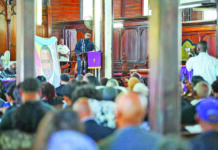
Stakeholders from the Latin America and the Caribbean (LAC) region are currently gathered in Georgetown for the 52nd Ordinary Meeting of the South American Commission for the Fight against Foot-and-Mouth Disease (COSALFA).
With the exception of Venezuela, all countries in South America are closer to eradicating foot-and-mouth disease, while subregions such as Central America, North America and the Caribbean are considered free of foot-and-mouth disease without vaccination.
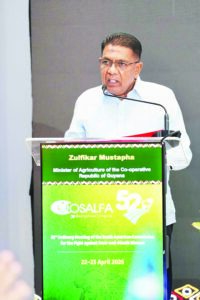
According to Agriculture Minister Zulfikar Mustapha, this extraordinary progress was built on strong surveillance systems, coordinated vaccination strategies, and the tireless work of veterinary services backed by decades of investments across the region.
Despite this achievement, however, Minister Mustapha warns that the job is not finished.
“The reality is this, the closer we get to full eradication, the higher the stakes become. One breach, one lapse in crossborder coordination, one weakness in early detection can undo years of effort,” the Minister posited.
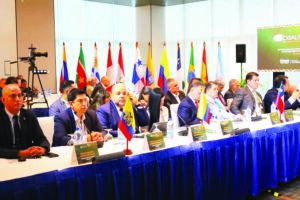
Cautioned against complacency
Similarly, Director of the Pan American FootandMouth Disease and Veterinary Public Health Center (PANAFTOSA/VPH), Manuel Sánchez Vázquez, also highlighted the region’s gains in its sanitary stability but cautioned against being complacent.
“This success, however, should not lead to overconfidence. While progress toward eradication has not advanced at the same pace globally, the risk profile for the Americas has evolved, shifting from primarily regional concerns to increasing exposure to global dynamics,” Vázquez stated.
In the LAC region, there have been no intraregional introductions since 2018, and for several decades no incursions from outside the region have been recorded.
The PANAFTOSA director pointed to reports of outbreaks in countries across Europe, Asia and Africa that were previously recognised as FMD-free without vaccination, highlighting that the disease continues to pose a global risk and underscoring the need for robust prevention frameworks and timely operational preparedness.
To this end, Vázquez noted that COSALFA, a 13-member-country body, remains essential as a space for dialogue, shared situational awareness, and coordinated regional action. The two-day meeting will see stakeholders review the Hemispheric Program for the Eradication of Foot-and-Mouth Disease (PHEFA) Action Plan 2021–2025 and discuss the strategic direction of the 2026–2039 cycle.
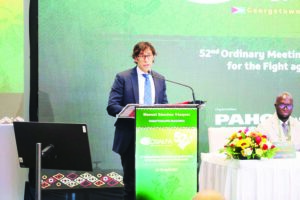
2026-2030 action plan
Mustapha told the regional stakeholders that the 2026-2030 action plan must ensure sharper tools, a stronger system, and a clearer understanding of the risk ahead. This includes examining the technical indicators that defined the progress thus far: the robustness of postvaccination monitoring; the performance of diagnostic laboratories; the integrity of traceability and animal movement controls; the readiness of emergency response mechanisms, and the emerging pressures from climate variability to increased trade flows that demand new approaches.
“For Guyana, hosting COSALFA 52 is part of our broader commitment to strengthening veterinary governance, expanding diagnostic capacity, and improving our national surveillance architecture. We see this meeting as an opportunity to deepen collaboration, accelerate technology adoption, and ensure that every country, large or small, has the systems needed to protect its livestock sector,” he posited.
The Agriculture Minister added, “This is not a routine meeting. It is a moment to sharpen our collective resolve. The region has come too far, invested too much, and built too strong a foundation to allow complacency to creep in. So, let us use this platform to push harder, think bigger, and act faster. Let us ensure that the next action plan positions our hemisphere not only to maintain FMDfree status but also to strengthen resilience across the entire animal health ecosystem.”
Guyana is among the 13 countries in South America and Panama that form the South American Commission for the Fight Against FootandMouth Disease. COSALFA consists of 26 representatives from these member countries, including a delegate from the public sector – the director of the Official Veterinary Service – and a delegate from the private sector, representing the principal national livestock association of each country.
COSALFA 52, which concludes today, was organised by the Guyana Livestock Development Authority (GLDA) and PANAFTOSA.
Discover more from Guyana Times
Subscribe to get the latest posts sent to your email.