

– amid challenges of learning complex vowel system
The English language is restricted to only five vowels, while the Akawaio language consists of seven. This could at times frustrate speakers of the English language who would like to learn the Akawaio language, making them struggle to grasp the tones of a language with a more complex vowel system.
Patrick Dorrick of Kamarang in Region 7 (Cuyuni-Mazaruni) has, however, mastered both languages, and is an inspiration to anyone who would like to learn both languages.
Speaking with Guyana Times, Dorrick revealed that when he started singing in the Akawaio language, people became attracted to it.
“When I was a very young man, I started to play guitar for the church. I could sing in English and I would sing in Akawaio, as I grew up hearing that language…,” he revealed. He explained that during his childhood days, there were books that detailed various tactics to teach the languages easily.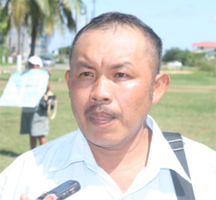
“Well, that is our native language. we have what I call Akawaio preservation: we have a book, and we learn (its contents). From there, we transfer it from English to the Akawaio, which is a very special book for us,” he detailed.
After explaining how the Akawaio language can be preserved, and noting the main factors causing its decline, he declared, “But now young people can’t read Akawaio. Why? Because it has seven vowels but English has five. So now it’s for young people, or maybe elderly people, to sell stories, sell history in Akawaio, so that young people can take over. If they don’t do this, we will lose our language.”
Dorrick has cautioned that the various Indigenous communities are in imminent danger of losing their various languages, and he has detailed the possible scenarios that may unfold if that were to happen.
“…and if this language is lost, what we will see for the Amerindian community is a loss of our identity. This is God’s given language to us, so we need to find ways to preserve it,” he admonished.
Dorrick has said he is very fond of singing gospel songs in his native language. He says it holds special significance for him, and evokes in him a feeling that is different from when he is singing in English. He noted how emotional he feels with every native word he utters.
“It feels very different, and it feels very spiritual for me, listening to it. I feel so happy that I could sing in my language, and you feel very different when you are speaking with God, and stuff,” he explained.
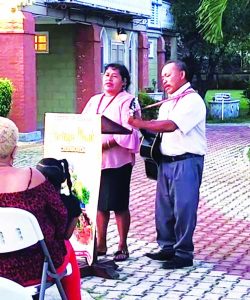
Dorrick sings as both a soloist and with his family. He says he began including his family in his musical pursuits after some time of singing to them in his native language.
“When I married my wife — just to give you a little understanding — we had five kids: four girls and one boy; and eventually, when they were very small, I started teaching them songs, hymns in general. So that is where my wife comes in, and when they became older, we started to sing together as a family,” he disclosed.
Asked how he feels about passing the mantle of singing in Akawaio to his children, he explained that singing is a fun and easier way to learn the language.
“I feel much better! In English, some words are very hard, and in Akawaio some words are very hard; but when you bring the music into it, you understand it more,” he explained.
Expounding on the need to influence others to master the art of learning the Akawaio language, Dorrick said that, under his wings, various leadership roles have been undertaken to help others learn the language.
“We were taking steps and representing as our advice to show for almost 12 years, and we presented our village to the ministers and relevant authorities, saying that they could consider us and teach the different native languages in Guyana and some schools,” he detailed.
Then he added, “There are other languages that we would also like people to know more about, because different areas have different languages.”
The challenge of mastering these additional vowels often results in slow progress, and many give up before achieving fluency, Dorwin explained. However, he said, for those who persevere, the reward is not only linguistic proficiency, but a deeper understanding and connection to the rich cultural heritage embedded in the Akawaio language.
The Akawaio language is spoken by 5,000 to 6,000 people in Guyana, most of whom live in northwestern parts of this South American country. Some speakers of the Akawaio language live in far eastern Venezuela and far north-central Brazil.
Discover more from Guyana Times
Subscribe to get the latest posts sent to your email.