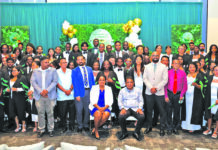


“Teacher burnout is a systemic issue and not an individual failure,” was the key message emerging from the Linden Fund USA (LFU) 2026 Teachers’ Workshop, which brought together educators in Region 10 for three days of training focused on teacher well-being, collaboration and holistic education.
Linden Fund USA (LFU), in partnership with the Department of Education, Region 10, has once again reinforced its longstanding commitment to educational development with the successful hosting of its 2026 Teachers’ Workshop, held from April 28–30 at the NICIL Watooka Complex in Mackenzie, Linden.
Bringing together secondary school educators, administrators and community stakeholders, the three-day workshop created a dynamic space for professional learning, reflection and collaboration. Building on nearly two decades of sustained engagement in Region 10, the initiative reflects LFU’s philosophy that meaningful educational advancement is grounded in long-term partnership and community-centred approaches rather than isolated interventions.
Under the theme “Beyond Academic Preparedness”, this year’s workshop expanded its focus to address not only instructional strategies but also the broader social and emotional dimensions of teaching and learning. Sessions explored culturally relevant pedagogy, cross-curricular planning, student engagement, and emerging issues such as artificial intelligence in education and bullying prevention.
A central feature of the workshop was its emphasis on teacher well-being. Facilitators introduced a Relational Restoration Framework, encouraging educators to reframe burnout not as an individual shortcoming but as a systemic issue shaped by emotional demands, limited collegial support and institutional pressures. Participants engaged in interactive breakout sessions to diagnose stressors, strengthen professional relationships and develop practical strategies to support both personal wellness and collective resilience.
LFU Board Member and secondary educator Ele Cayana, who co-facilitated the workshop, underscored the importance of sustained, reflective practice.
“This workshop is not a one-off event but part of a continuous investment in our teachers. When educators are given space to reflect, collaborate and respond to their realities, they become more effective not only in the classroom but also as leaders within their schools and communities.”
Meanwhile, co-facilitator Dr Rochelle Sykes, a clinical psychologist, highlighted the critical role of institutional support in addressing teacher burnout:
“Teachers are often asked to carry emotional and social demands far beyond instruction. Sustainable change comes when we move from expecting individual endurance to building systems of shared support that protect and strengthen teacher well-being.”
As participants return to their classrooms, organisers anticipate that the knowledge, strategies and collaborative networks established during the workshop will have a lasting impact on teaching practice and student outcomes across Region 10.
Phase One of a three-part series, this workshop’s most significant expected outcome is the development of the Holistic Readiness Instrument – Guyana (HRI-GY)—a research-informed tool designed to assess and strengthen student readiness for CXC examinations across multiple domains, including academic, social, institutional, and community factors.
Since 2006, LFU and its local counterpart, LFU Guyana Inc, have worked collaboratively with the Department of Education, Region 10, to deliver sustained, high-impact teacher training. This year’s workshop built on that legacy, reflecting LFU’s philosophy that meaningful educational progress is rooted in community partnership, cultural relevance, and long-term engagement—not one-time interventions.
Discover more from Guyana Times
Subscribe to get the latest posts sent to your email.