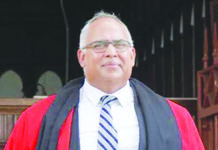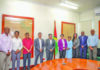


An $85 million investment is being used to establish specialised AutoCAD laboratories at six secondary schools across Guyana, with the latest facilities commissioned on Monday at Hope Secondary School and North Ruimveldt Secondary School. The state-of-the-art laboratories will allow students to transition from traditional manual technical drawing to computer-aided design, using specialised software to create detailed 2D and 3D digital models. The initiative is aimed at equipping students with practical skills for future careers in fields including architecture, engineering and construction. Speaking at the commissioning of the AutoCAD laboratory on Monday, Deputy Chief Education Officer (DCEO) with responsibility for Technical and Vocational Education and Training (TVET), Dr Ritesh Tularam, highlighted the importance of technology in education and student development.
“Technologies are now playing a critical role in the development of our students and systems that we are operating with. As a result of that, the Ministry of Education is very cognisant as it relates to the utilisation of novel technologies by our students, so that they can maintain that degree of competitiveness and acquire the requisite skill sets.” According to Tularam, the laboratories will allow students to develop the necessary competencies and transition smoothly into the world of work as they pursue their chosen careers. He said AutoCAD is increasingly important in today’s digital economy, as it replaces many traditional manual drafting processes with more accurate and efficient computer-based design.
Tularam noted that the software also allows students to create 3D models and visualisations, helping them transform creative and innovative ideas into digital designs and, eventually, physical prototypes through 3D printing. He added that AutoCAD is widely used across engineering and construction-related fields, including architecture, civil, mechanical and electrical engineering, making proficiency in the software an important skill for students pursuing careers in these disciplines. “As the country continues to expand in sectors such as infrastructure, housing, energy and manufacturing, the demand for digitally skilled and technically competent professionals will continue to grow,” he stated. Hope Secondary School and North Ruimveldt Secondary School were both commissioned on Monday, joining Abram Zuil Secondary School and Bygeval Secondary School, where AutoCAD laboratories were previously commissioned. The remaining two facilities under the initiative are scheduled to be commissioned next, with New Amsterdam Multilateral School slated for Tuesday and Zeeburg Secondary School on Wednesday. Tularam stated that three additional AutoCAD laboratories are expected to be commissioned in the coming week, as the Ministry of Education continues efforts to expand TVET.
He said the expansion reflects the Ministry’s recognition that, while academic education remains important, not every student is inclined towards a traditional academic path. He noted that some students excel in technical skills, which can help them build capacity, earn a livelihood, contribute to their communities and support national development. “In the coming week, some three other AutoCAD labs will be commissioned, now, one of the things that we said we were going to do in the next five years is to expand technical and vocational training, which means that we recognise not every student wants to read a book. And every student should read a book; reading is really good. But not every student wants to be an academic. There are children who will do very well with technical skills, meaning that they can build their capacity in some sort of skills training that will allow them to contribute constructively to their communities, earn a living and also contribute nationally.”
New & advanced technological resource
Meanwhile, Education Minister Sonia Parag said the AutoCAD laboratory provides students with the opportunity to work with precise dimensions, improve accuracy and apply their imagination and creativity through computer-based design before transferring their work to paper. She described the facility as a new and advanced technological resource, noting that similar technology is used in developed countries. Parag encouraged students to make full use of the facility and the opportunities it provides. “Whatever it is, just make sure that you are going to be utilising this lab for the purpose for which it is being brought to your school, so that you can have the firsthand experience of doing those designs yourself. So promise me, even if you’re not going to go into that field, that you’re at least going to go and try it out. Because right now, it’s only available to Grades 10 and 11. So it’s not here to just serve you, but it is here to serve generations. That’s why Dr Tularam and others who spoke were telling you that it’s something sustainable.”
Discover more from Guyana Times
Subscribe to get the latest posts sent to your email.