

…leads early-morning assessment of flood-hit areas
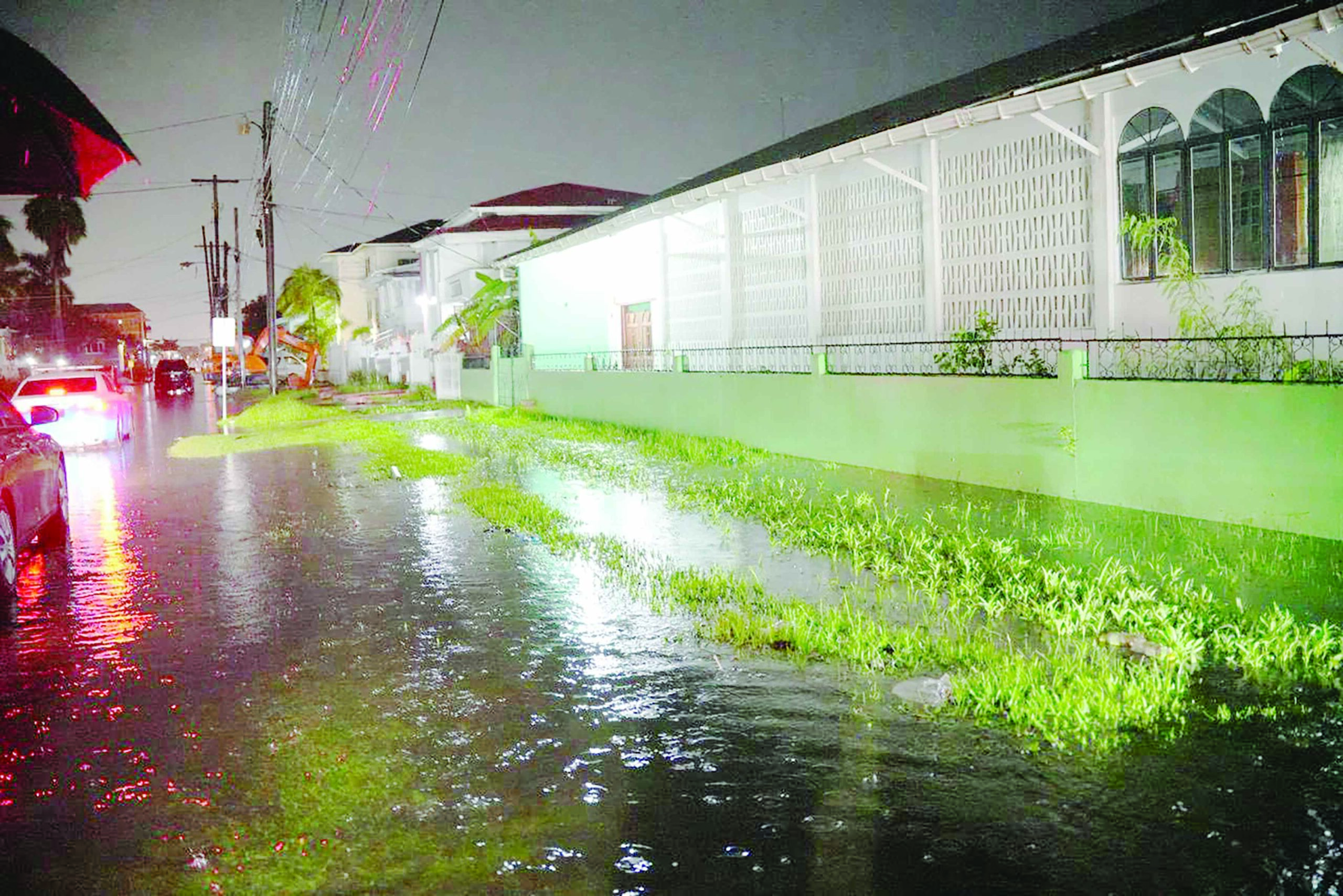
During the wee hours of Tuesday, President Dr Irfaan Ali led a team of Ministers and other officials to inspect flood-hit sections across Georgetown.
The Head of State revealed that 217 pumps are operable across the country, but with rainfall forecast to intensify over the next few days, additional pumps will be deployed by the weekend.
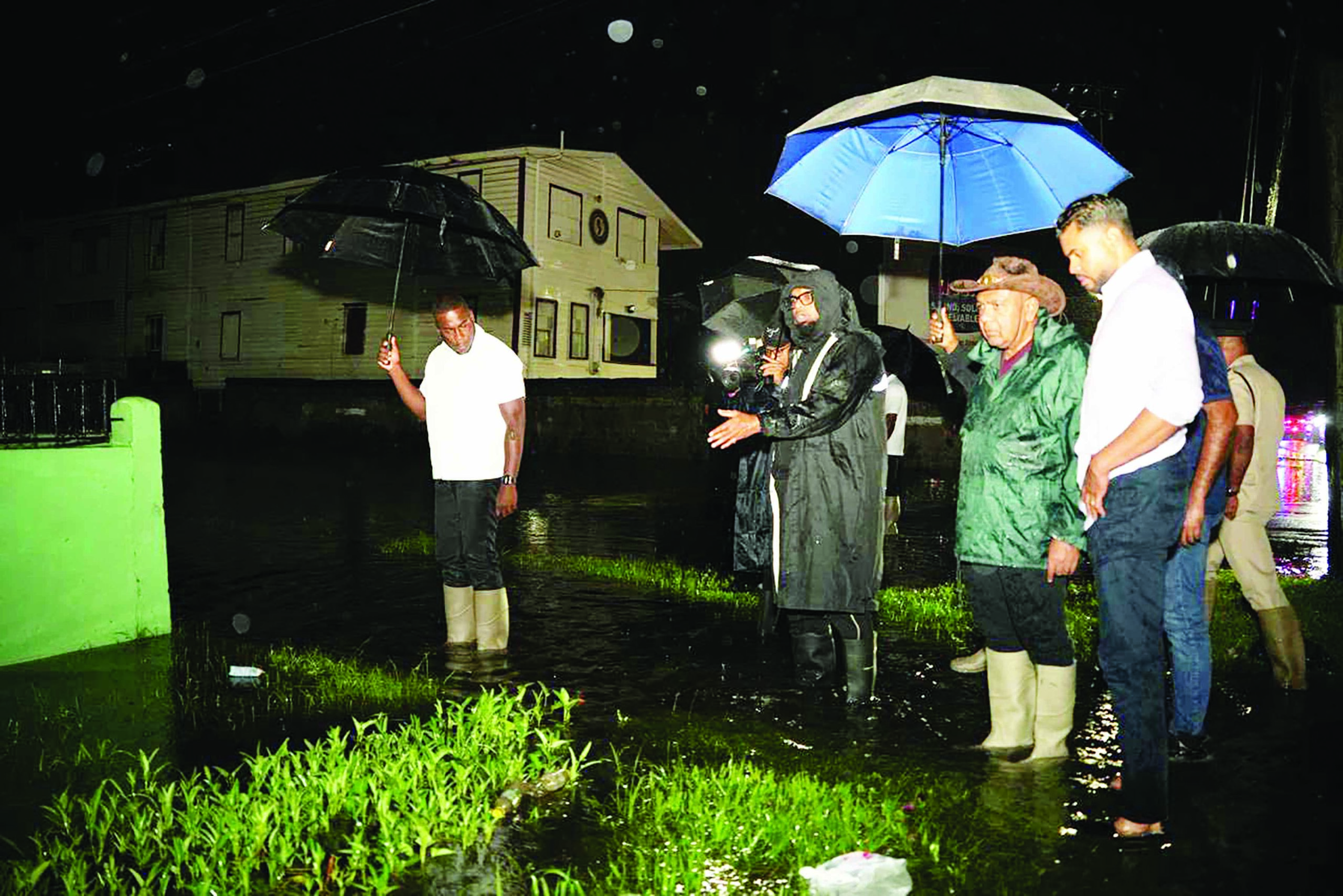
“So, we have about 217 pumps nationally deployed, working almost 24 hours around the clock. And that is in all of the critical areas. On Friday, we have an additional 11 pumps, new pumps that will be in the country to be deployed at other areas,” he explained in a live broadcast during his walkabout.
Accompanying the President was Agriculture Minister Zulfikar Mustapha, who said so far, there have been no major incidents and assured that authorities will continue to monitor vulnerable communities.
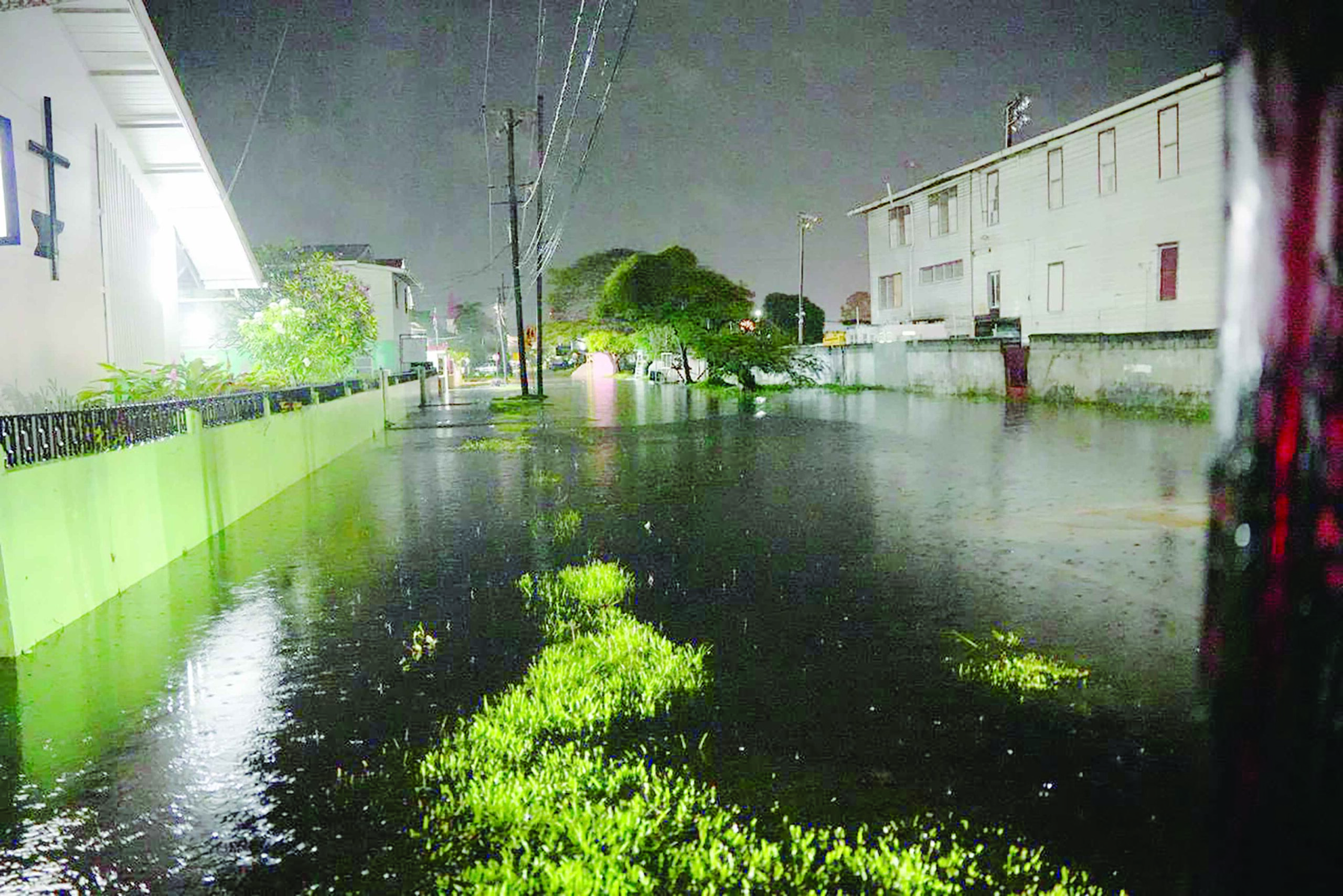 “So far, we haven’t had any major concerns where residents’ houses would have been flooded out, but we are still monitoring that,” he said.
The Government has activated a 24-hour monitoring room involving key agencies, including the Civil Defence Commission, the National Drainage and Irrigation Authority (NDIA), the Guyana Police Force and other joint services.
Mustapha noted that as of 14:00h on Monday, Georgetown had already recorded approximately four and a half inches of rainfall.
The Hydrometeorological Service has forecast continued rainfall across Guyana from May 11–13, with heavier rainfall expected on May 14 and 15. These conditions increase the likelihood of flooding over the next five days, particularly in low-lying and poorly-drained communities.
 Forecast models indicate that all regions may be affected, with Regions Two (Pomeroon-Supenaam), Three (Essequibo Islands-West Demerara), Four (Demerara-Mahaica), Five (Mahaica-Berbice) and Six (East Berbice-Corentyne) considered most at risk.
Meanwhile, Chairman of the NDIA, Lionel Wordsworth, noted that two weeks ago, authorities started clearing outfall channels.
“In addition to the pumps and sluices that are in place, what’s critical also is that we have started about two weeks ago, into the rainy season, the clearing of the outfall channels in Georgetown. We have 13 sluices, which is operated, and all those outfalls will be cleaned. We started, and that will continue. All the pumps are working, and not only in the city, throughout the coast, in areas in Region Six, the outfall channels are there. We have these new types of amphibious excavators, which are doing a great job on the inlet and the outlet side. So, if you go to many of these sluices sites’, a lot of excavation work is taking place, and yes, we have to continue monitoring that we maximise these to drain accumulated water on the land,” he explained.
City Council neglect
Meanwhile, while in Queenstown, President Ali highlighted poor maintenance by the Georgetown Mayor and City Council as a major factor contributing to persistent flooding across the capital.
“There are a few streets, however, in Georgetown and a few areas that continue to have this challenge that we see here, for example, in Queenstown, where you have some flooded areas,” the President outlined during his live broadcast, pointing to the overflowing drains.
“You will see that a lot of it is filled in with sand and filled in with builders’ waste and also overgrown. The lack of maintenance from the city, of course, is a major challenge for us. When you look at the alleyways in Queenstown and many of the other areas in Georgetown, even in Albouystown and so on, the drainage between the alleyways are completely overgrown. They are not maintained at all,” the President noted, adding that these areas are only ever maintained through the central Government’s capital interventions.
He explained that because of the lack of maintenance, even though the pumps are working, flooding will continue to occur.
Pointing to a flooded drain in Queenstown, the President remarked that “this should have been a drain that should have had also storage capacity. But look at the drain, not maintained at all.”
In this regard, President Ali explained that the central Government will have to develop a long-term maintenance programme.
“We can’t rely on the City Council,” he noted. “We have to make these investments.”
Discover more from Guyana Times
Subscribe to get the latest posts sent to your email.