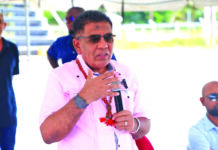


The Caribbean’s future prosperity depends on safe, secure and sustainable shipping, with regional cooperation remaining essential as the maritime sector undergoes rapid transformation, according to a senior official of the International Maritime Organisation (IMO). Speaking at the opening of the Fifth Regional Meeting of Directors and Heads of Maritime Administrations (DMAR5) in Georgetown, on Sunday, Head of the Latin America and Caribbean (LAC) Section within the IMO’s Technical Cooperation and Implementation Division, Carlos Salgado, said maritime affairs have become a strategic priority for countries throughout the region.
He noted that maritime development is closely linked to economic growth, trade, connectivity, environmental sustainability, energy security and national resilience.
“For the Caribbean, the sea is not a shared geography. It is a shared future,” Salgado told delegates gathered for the regional meeting. According to the IMO official, the prosperity of Caribbean countries depends on safe, secure, efficient and sustainable shipping, supported by strong maritime institutions, modern ports and effective regulatory frameworks. He pointed out that the global maritime sector is currently experiencing one of the most significant periods of change in its history, driven by digitalisation, emerging technologies and the transition towards decarbonisation.
At the same time, he said climate change continues to place additional pressures on small island developing states and coastal nations. “These developments require more than technical solutions. They require vision, leadership and coordinated action,” Salgado stated. He explained that the IMO continues to support member states through technical cooperation programmes and strategic partnerships aimed at strengthening governance, building institutional capacity and developing human resources. Salgado noted that the DMAR forum has become an increasingly important platform for Caribbean maritime leaders to identify common priorities and develop practical solutions to shared challenges. “It brings together maritime leaders to identify common priorities, strengthen national cooperation and advance practical solutions to shared challenges,” he said. Over the next several days, delegates will discuss issues including institutional strengthening, legal and policy reform, maritime facilitation, environmental protection, decarbonisation, capacity building, resource mobilisation and the development of future maritime leaders. The discussions, Salgado said, are not solely about meeting international obligations but about creating conditions for sustainable economic development, protecting marine resources and strengthening regional resilience. He further noted that the Caribbean is uniquely positioned to demonstrate the benefits of collaboration among small developing states facing similar challenges. “The Caribbean has a unique opportunity to demonstrate how regional cooperation can accelerate progress and how small island developing states can successfully navigate the complex challenges of the 21st century,” he said. Salgado reaffirmed the IMO’s commitment to supporting maritime development throughout the region and encouraged participants to use the meeting to deepen cooperation and advance a safer, more sustainable and prosperous future for the Caribbean maritime sector.
The DMAR5 meeting has brought together directors and heads of maritime administrations, representatives of regional and international organisations and industry stakeholders from across the Caribbean to discuss the future of maritime governance and cooperation in the region.
Discover more from Guyana Times
Subscribe to get the latest posts sent to your email.