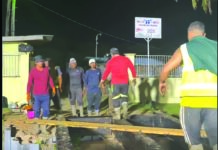


Flooding across several regions of Guyana has forced the closure of schools and disrupted daily life as communities remain inundated following days of persistent rainfall, leaving residents grappling with rising waters, damaged infrastructure and transportation challenges. Several reports have emerged from various regions across Guyana detailing the aftermath of widespread flooding, leaving numerous communities underwater.
On Sunday, education officers visited more than 75 per cent of schools across the country to assess conditions and ensure that learning environments remain safe and accessible. Following these assessments, it has been confirmed that only seven schools have temporarily closed due to weather-related challenges. The Ministry said that is working closely with affected institutions to provide support and ensure that learning continues through alternative arrangements where necessary. It also commended the dedication of education officers and expressed gratitude to parents, teachers and communities for their cooperation. “We remain committed to safeguarding the welfare of students and staff and will continue to provide timely updates as the situation evolves,” the Ministry stated. Meanwhile, due to persistent downpours in Region Four (Demerara-Mahaica), St Cuthbert’s Mission continues to experience severe flooding. Toshao Alvaro Simon told Guyana Times that scores of houses located along the riverfront within the community have been flooded. “The rain is still falling, so we expect water levels to continue rising. Along the river edge, I would estimate that approximately 60 houses have been affected or flooded.” Simon also noted that the community has suffered agricultural losses, with scores of poultry dying as floodwaters continue to rise. “We have experienced losses, especially in poultry. A lot of ducks have died and, as we know, the river edge is where much of our farming takes place. Our farms and cassava plants are underwater. We are still conducting assessments through our agriculture officers to determine the extent of the damage.” In terms of transportation, Simon explained that most vehicles remain along the main roadway, limiting the number of vehicles affected by flooding.
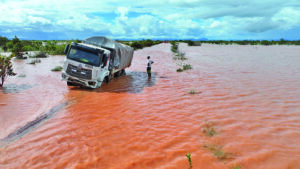
Conditions along the Soesdyke-Linden Highway are also deteriorating, with rising waters inundating sections of the carriageway and prompting drivers to exercise extreme caution. In Region Nine (Upper Takutu-Upper Essequibo), while some vehicles are cautiously making their way across the Pirara Bridge, several trucks have reportedly overturned and remain stranded on the Lethem side of the crossing.
This publication also spoke with wildlife conservationist, Neal Miller from Region Nine, who explained that while flooding has affected parts of the region, seasonal flooding remains a natural phenomenon. “Yes, Region Nine has experienced significant rainfall over the last few weeks, causing flooding in some areas. However, flooding is not unusual for the region and is actually necessary for wildlife and biodiversity. Without flooding, watersheds such as the Takutu and Essequibo systems would not connect, which would negatively affect wildlife populations. The flooding has also not been as extreme as in previous years.” Additional vehicles continue to traverse the Huntoil Stretch; however, drivers are being urged to remain vigilant and proceed cautiously due to ongoing weather conditions and deteriorating road surfaces. To compound the situation, the Huntoil Stretch along the Lethem Road continues to create major delays for commuters, with significant portions of the approximately sixteen-mile roadway submerged under as much as four feet of water in some areas. In light of continuous downpours across Guyana, residents of the Indigenous village of Moraikobai in Region Five (Mahaica-Berbice) are also bracing for worsening conditions as water levels continue rising along the Mahaicony River. On Sunday, water inundated sections of the community’s access bridge and surrounding communal areas, while rising river levels have also affected neighbouring communities. Several houses in Sewe Village, Section Three, have been flooded following days of persistent rainfall. Over the weekend, Government officials were dispatched to assess conditions in several affected areas, including Regions Three, Five, and Six, where multiple communities experienced flooding. However, for residents living along the Mahaicony River, concerns extend beyond flooded yards and access routes to include farms, transportation links and other aspects of daily life. Meanwhile, Region Five Chairman Ricardo Phillips told the evening news that the Regional Democratic Council (RDC) has activated its emergency response plan and continues to monitor communities along the Mahaicony River as water levels continue to rise.
Discover more from Guyana Times
Subscribe to get the latest posts sent to your email.