

…as PSC urges all stakeholders to fully cooperate
As the Commission of Inquiry (CoI) prepares to begin its investigation into the MV Barima tragedy, two major private sector organisations have welcomed the team assembled by President Dr Irfaan Ali, expressing confidence that its composition inspires trust in the inquiry’s ability to be thorough, independent and credible. On Sunday, President Dr Irfaan Ali announced the establishment of a five-member international CoI into the July 18 sinking of the passenger and cargo ferry – a move welcomed by both the Georgetown Chamber of Commerce and Industry (GCCI) and the Private Sector Commission (PSC).
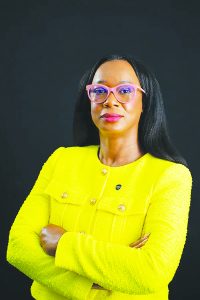
GCCI
In a statement on Sunday, the GCCI, led by Kathy Smith, noted that the expertise of the CoI members inspires confidence that the investigation will be credible. The Chamber said the members’ “collective expertise in judicial affairs, marine engineering, maritime surveying and compliance, admiralty and maritime law, and maritime operations and security inspires confidence that the inquiry will be thorough, independent, credible and evidence-based.” According to the GCCI, the CoI presents a significant opportunity to ascertain the facts, draw valuable lessons, and build public confidence in the institutions responsible for safeguarding the travelling public. Additionally, GCCI expressed hope that the findings and recommendations will inform measures that enhance public safety, strengthen regulatory oversight and support the continued advancement of Guyana’s transport sector. It noted that “beyond the inquiry itself, the Commission’s enduring legacy will be defined by the implementation of its recommendations, allowing this tragedy to serve as a catalyst for lasting improvements in public safety, regulatory oversight, and the protection of all who rely on Guyana’s transport systems”.
GOGEC
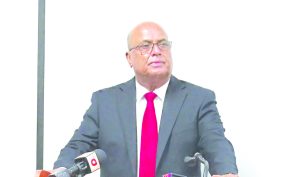
Similar sentiments were expressed by the Manniram Prashad-led Guyana Oil and Gas Energy Chamber (GOGEC) via a statement on Monday. “The appointment of respected experts in maritime law, marine engineering, navigation and judicial affairs reflects the Government’s commitment to ensuring a comprehensive, transparent and impartial examination of the circumstances surrounding this heartbreaking national tragedy,” the body noted. GOGEC similarly noted that the inclusion of internationally recognised professionals from Belize, Jamaica, Trinidad and Tobago and Poland, “demonstrates Guyana’s commitment to adhering to the highest standards of governance, justice and maritime safety”. “GOGEC is confident that the Commission’s findings will provide valuable recommendations to enhance maritime operations, improve safety protocols and help prevent similar incidents in the future,” the Chamber added. As Guyana continues its rapid economic and maritime development, GOGEC said it fully supports initiatives that promote accountability, transparency and the protection of human life. The Chamber emphasised that it stands firmly behind the Government’s efforts and looks forward to the Commission conducting its work independently, professionally and in the best interest of the people of Guyana.
PSC
Meanwhile, in a statement on Monday, the PSC pledged its support for efforts to strengthen safety standards and improve regulatory oversight, emphasising that the incident must mark a turning point for Guyana. “This tragedy must become a turning point for our country. The Private Sector Commission stands ready to support efforts to strengthen safety standards, improve regulatory oversight, modernise operational practices and foster stronger collaboration between the public and private sectors. We are committed to working with all stakeholders to ensure that the Commission’s recommendations result in meaningful and lasting change. The memories of those who lost their lives demand nothing less,” the Gerry Gouveia Jr led organisation noted. “The PSC believes that every family who lost a loved one deserves answers. Survivors deserve to know the truth. The people of Guyana deserve confidence that every lesson will be learned and that every recommendation necessary to strengthen maritime safety will be implemented,” the Commission added. In fact, the PSC emphasised the importance of the CoI being “comprehensive, transparent, independent and guided solely by the facts”. The private sector umbrella body noted that, ‘its work should identify any operational, regulatory, institutional or individual failures that contributed to this disaster while recommending practical reforms to strengthen passenger safety, emergency preparedness, vessel operations, and regulatory oversight across Guyana’s maritime sector”. The PSC also expressed the view that the private sector should play a meaningful role in supporting the Commission’s work, noting that “during the rescue and recovery effort, private companies, vessel operators, aviation providers, offshore operators, fisherfolk, divers and volunteers worked alongside Government agencies, bringing operational experience and technical expertise that can strengthen the investigation and help inform future reforms”. Moreover, as the Commission begins its work, the PSC is urging all individuals, organisations and institutions with relevant information to cooperate fully. “Establishing the complete sequence of events and understanding every contributing factor will be essential if Guyana is to build a safer and more accountable maritime transportation system,” the PSC emphasised.
CoI
The five-member CoI will be headed by former Belizean Justice of Appeal and distinguished legal expert, Godfrey Phillip Smith, who currently serves as the CARICOM High-Level Representative for Law and Criminal Justice and is the Ad Hoc Justice of Appeal at the Eastern Caribbean Court of Appeal. It also includes Captain Hamada Fouda, an internationally respected maritime safety specialist with more than 35 years of experience in marine regulation and casualty investigations; Trinidad and Tobago Senior Attorney-at-Law, Nyree Dawn Alfonso, who has represented clients in complex ship arrests, maritime disputes, salvage operations, collisions, marine casualty claims, marine insurance matters and arbitrations; Dr Andrzej Jasionowski, a forensic naval architecture and marine engineering expert, out of Poland, who has specialised since 1995 in the application of advanced numerical techniques for stability, hydrodynamics, oil film lubrication, thermodynamics of liquefied natural gas (LNG) mixtures, ship flooding simulations, probabilistic assessments of time to sink and capsize, holistic risk quantification, and shaft alignment; and decorated Trinidad and Tobago Rear Admiral (RADM) Hayden A Pritchard, who has over 38 years of experience in security and maritime operations, policy development, change management and public and security sector reform. The Commission will have to determine its own procedures and methods of work consistent with its mandate. The Terms of Reference will be establishing the full circumstances surrounding the tragedy, including the causes and all other factors relating to the loading of the vessel, the boarding of passengers, conditions on board, the capsizing and sinking of the MV Barima, and any other related matters. The team will also be comprehensively reviewing all aspects of the search, rescue, and recovery operations, including the adequacy, coordination and effectiveness of the response by all agencies and stakeholders involved. They will also have to evaluate the extent to which applicable laws, regulations, standards and operating procedures governing ferries were complied with, while further determine whether any acts of negligence, misconduct, dereliction of duty, or other failures by any individual, entity or institution contributed to or caused the disaster. Moreover, the Commissioners will be tasked with inspecting the condition and maintenance history of the vessel, including its seaworthiness, analysing the influence of weather, sea conditions, tides, currents, navigation, communications and other environmental or operational factors that may have contributed to the incident. Further, they will have to appraise the competence, qualification, training and conduct of the vessel’s master and crew, including compliance with established maritime safety and emergency procedures. The five-member team will also have to scrutinise passenger management, including embarkation procedures, manifest preparation, the possible overcrowding of the vessel, the stowage of cargo, availability and use of life-saving equipment and adherence to passenger safety requirements. At the end of their investigation, the Commissioners will recommend any legislative, regulatory, institutional, and operational reforms, together with any other measures, necessary to strengthen maritime safety, improve emergency preparedness and response and reduce the likelihood of similar tragedies occurring in the future. The MV Barima was en route to Port Kaituma, Region One (Barima-Waini) with 179 people onboard, when it capsized and sank off the Essequibo Coast in Region Two (Pomeroon-Supenaam).
Discover more from Guyana Times
Subscribe to get the latest posts sent to your email.