


 By Dr Narendra C Singh
BSc, MBBS, FRCPC, FAAP, FCCM, MSM, MBA, Hon LLD,
Humber River Hospital
Associate Clinical Professor
McMaster University
The global experience with children in the current COVID-19 pandemic has demonstrated a much milder illness, in this otherwise vulnerable population. The reason for this fortunate difference is open to scientific speculation. Chemicals (cytokines) are released by the body when exposed to an infection or injury. Adults have a much stronger immune system, often resulting in an exaggerated response (cytokine surge) to infections which can damage various organ systems including the lungs, the heart and the kidneys.
It is believed that because of their immature immune system, children cannot mount this “cytokine surge” resulting in milder disease. Despite this predominantly mild disease in children, we cannot be complacent since they can be the potential carriers to the most vulnerable in our population. We also know that children with certain risk factors can be susceptible to moderate and severe symptoms, with increased hospitalisation and death. Multisystem Inflammatory Syndrome in Children (MIS-C) is a new disease entity with a broad spectrum of clinical presentations that is predominantly seen in children.
The American Academy of Pediatrics (AAP) announced this week that there was a significant increase in cases in children in the past two weeks in the United States. Whether this is as a result of school openings is unclear but it means that there are more kids that can potentially transmit the virus to the more vulnerable in the population. A number of studies have demonstrated that children with COVID-19 have more viral load in the nasopharynx, however, there is no conclusive evidence that they are more or less contagious. Special precaution should be taken to avoid exposure to the elderly such as grandparents.
 The symptoms of COVID-19 are similar in children and adults, but the frequency of the symptoms vary. Fever and cough are the predominant presenting symptoms but vomiting, diarrhoea, abdominal pain, muscle pain, loss of smell and headaches can all be seen in isolation or concurrently. “COVID toes” characterised by purple blisters on the distal parts of the toes have also been described. In a systematic review by the CDC of 7480 children younger than 18 with laboratory-confirmed COVID-19 infection, information about symptoms and severity was available for 1475. Among these, 15 per cent of cases were asymptomatic, 42 per cent were mild, 39 per cent were moderate (eg, clinical or radiographic evidence of pneumonia without hypoxemia), 2 per cent were severe (eg, dyspnea, central cyanosis, hypoxemia), and 0.7 per cent were critical (eg, acute respiratory distress syndrome, respiratory failure, shock). There were six deaths in the entire study population (0.08 per cent). Risk factors for severe disease include but are not limited to obesity, diabetes and asthma.
Since the disease is very mild in most cases there is no specific treatment except supportive care. Appropriate isolation, contact tracing, handwashing and mask wearing are the cornerstone to preventing the spread. Patients that meet hospitalization criteria will often require oxygen, high flow or rarely mechanical ventilation. Dexamethasone is often used in moderate to severe cases and the antiviral drug Remdesivir is available for emergency authorization. Neither of these drugs have been well studied in the pediatric population. The author has used both of these drugs in two severe cases and both had a full recovery.
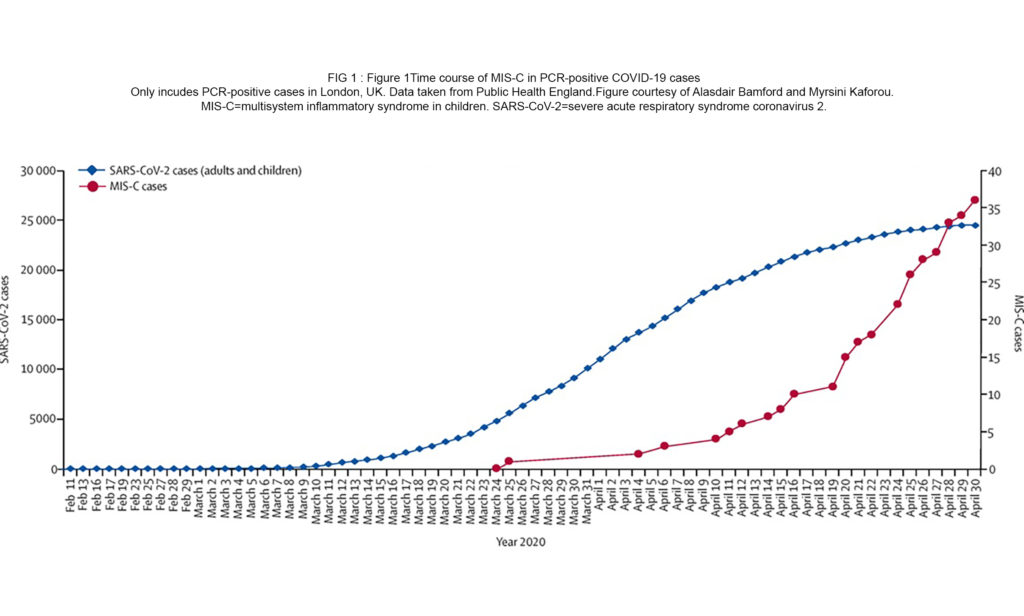
Multisystem Inflammatory Syndrome in Children (MIS-C) is a rear but increasingly recognized disease related to COVID- 19. It is similar to another illness termed Kawasaki’s disease (KD) which presents with some characteristic features including persistent fever, conjunctivitis, lesions in the mouth, swollen glands, skin rash and dilatation of the blood vessels of the heart. There are, however, some significant differences to MIS-C. The symptoms generally begin 3-4 weeks after exposure or infection with COVID-19 (FIG 1). The most common comorbidities are obesity and asthma and are seen in a disproportionate percentage of Black and Hispanic children.
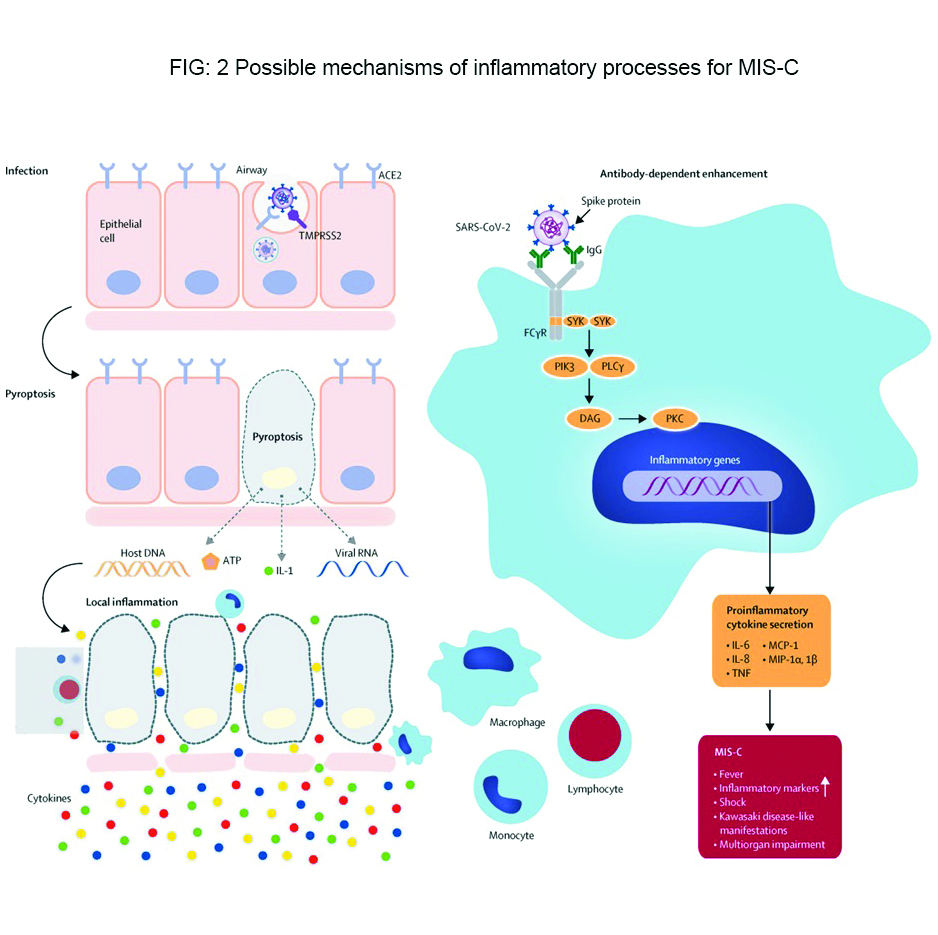 This lag of 3-4 weeks suggests that the illness is likely a post infectious complication since it coincides with the timing of the body acquiring immunity. Many patients have a negative PCR test but have circulating antibodies to COVID-19 confirming that this is not an acute infection. The mechanism by which this disease causes multisystem damage is under investigation (FIG 2). This illness results in significant inflammation in many organs in the body resulting in the release of certain proteins into the blood called inflammatory markers. There are a number of such markers but the most common ones measured are CRP, ESR and procalcitonin. These tend to be extremely high especially in the first subtype and are measured serially to gauge recovery.
There appears to be three subtypes:
1. MIC-C without overlap with KD or acute COVID-19 (35%) – Patents in this group have significant heart dysfunction and often present in shock.
2. MIS-C overlapping with acute COVID-19 (30%) – These patients present with a pneumonia similar to that seen in adults. Most of these children have a positive PCR for COVID-19 and the mortality is much higher than the other two groups.
3. MIS-C overlapping with KD (35 %) – Many of these patients have a number of symptoms consistent with KD without the heart and lung involvement.
The author has provided care for seven such in the pediatric ICU in the US. All of them had varying involvement of the heart and most of them fell into subtype 1. None of them were PCR positive for COVID-19 but five had circulating antibodies suggesting recent infection. All seven had an elevation in troponin levels (proteins released into the blood when the heart is damaged) and varying degree of heart failure as seen on echocardiogram. Five of them required medications (inotropes) to improve the function of the heart. All required oxygen and one required mechanical ventilation for severe shock and respiratory failure.
For the successful treatment of these patients it is crucial to recognize that the condition exists and be vigilant. The treatment consists of supportive care including close monitoring in an Intensive care setting. Provide oxygen to support the lungs and inotropes to support the function of the heart. Since this condition is thought to be an immune mediated reaction to COVID-19, therapy is directed towards supressing the exaggerated immune response using intravenous immune globulin (IVIG). This has been found to be very successful and full recovery of the heart function is seen in most cases. Dexamethasone is often utilised as part of the treatment protocol especially in children with significant lung involvement. Clotting of the coronary arteries and other vessels have been described with KD and MIS-C and therefore low dose aspirin is used prophylactically.
Cases of MIS-C have been reported in low- and middle-income countries (LMIC). Because of the lack of recourses including IVIG, steroids are a cheaper and more readily available option. Their potential to induce broad immunosuppression might be hazardous in countries in which tuberculosis and HIV infection are highly prevalent and where diagnostic facilities (to exclude other types of infection) are scarce. Therefore, steroid use needs to be restricted to short-term courses in children who have been hospitalised with MIS-C and who are severely ill.
We are very fortunate that the most vulnerable in our population, our children, have been relatively spared from COVID-19. Let us not forget that they can be potential carriers and therefore wearing masks, hand washing and social distancing are crucial to preventing the spread the virus. Parents and clinicians alike need to be aware that there is group of high-risk children that are more susceptible to severe disease. In addition, MIS-C is a new entity and with the opening of schools and the potential increase in cases we need to be vigilant for an increase in such cases in the next few months.
Discover more from Guyana Times
Subscribe to get the latest posts sent to your email.