


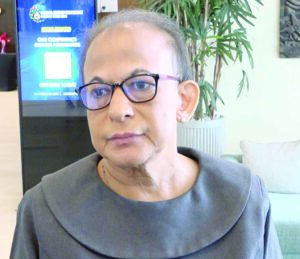
Human Services and Social Security Minister Dr Vindhya Persaud recently told the National Assembly that 584 pregnant girls under the age of 16 were referred to the Childcare and Protection Agency (CPA) between 2020 and 2025.
It was further disclosed that when a child under the age of 16 gives birth or is identified as pregnant, the case is immediately brought to the attention of the CPA, and a comprehensive child protection risk assessment is conducted.
But despite the released statistics, prosecution rates for related sexual offences remain low, and according to the Director of Public Prosecutions’ (DPP) Chambers, this is largely due to a lack of cooperation from victims and the unavailability of witnesses.
This was according to Communications and Outreach Officer Liz Rahaman, who stated that getting witnesses to come forward remains a major challenge.
“The DPP faces challenges to get victims themselves to come forward and offer evidence, and one would know when sexual offences are committed, they are committed in private, in the dark; they are committed outside of witnesses… so if that victim does not wish to proceed with the matter, it places the DPP in a very difficult position, and that is the main challenge the DPP faces.”
Rahaman noted that during their outreaches over the years, they have spoken to the residents about the importance of coming forward and reporting the crime.
“Over the years, we have had numerous police files being sent to the DPP’s office for sexual offences being committed and reported to the Guyana Police Force in all the regions, and we can safely say it is as a result of our public education programmes as we continue to sensitise … In fact, they have become more aware of the importance of going to the police and reporting these crimes.”
Furthermore, Rahaman added that from 2013 to the present, the DPP has been conducting public education and awareness events across several parts of the country, primarily in the hinterland communities.
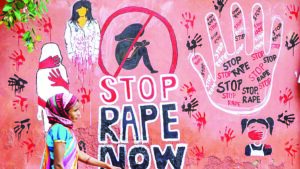 “We have been focusing our attention on Baramita, Moruca, and Mabaruma in Region One (Barima-Waini), and we have done extensive work in Region Nine (Upper Takutu-Upper Essequibo)…we have covered all the areas in Region Nine despite the vastness…we have covered topics on sexual offence matters and domestic violence.”
Nevertheless, she noted that sexual offences have moved away from being committed only against girl children to boys.
“The only way we can ensure their safety is for them to become more aware through our public sensitisation programmes. If somebody does something to them, entices them, or whatever, they must know… They have to know that it is a sexual offence… whether that crime is committed inside their homes by family members or people close to them acting in a position of trust…”
Meanwhile, earlier this month, the DPP’s office reminded us that Guyana’s Sexual Offences Act provides strong legal protections for children against sexual abuse by relatives and adults in positions of trust.
The legislation also addresses situations where adults misuse positions of responsibility to sexually exploit children.
As such, members of the public are encouraged to report suspected cases of child sexual abuse and to support victims through the criminal justice process.
Discover more from Guyana Times
Subscribe to get the latest posts sent to your email.