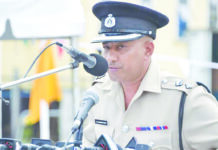


The Guyana Prison Service has said that it has evolved significantly over the past six decades, shifting from an overcrowded, resource-constrained penal system to a more structured correctional institution increasingly focused on rehabilitation, training, and reintegration.
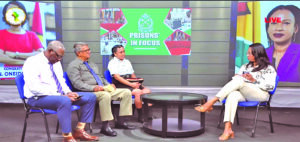
The reflections were shared during a televised episode of Prison in Focus, marking Guyana’s 60th Independence anniversary, featuring retired and serving officers of the Guyana Prison Service.
The programme brought together retired Chief Prison Officer Iddo Lyte, retired Superintendent of Prisons Phillip Bandoo, and serving officer Lucia Cyril, to examine the theme of transformation in corrections.
Retired Chief Prison Officer Iddo Lyte, who served for more than four decades, said the prison system has undergone major structural and institutional changes since he joined the service.
“We’ve come a far way, we’ve come very far from where we were,” Lyte said.
He pointed to key institutional reforms, including the introduction of local leadership within the Prison Service.
“We had our own Guyanese director because before we didn’t have local directors, so that was a change right away,” he noted.
Lyte also highlighted infrastructural improvements, particularly in sanitation and living conditions.
“In those days it was pit latrine, now there’s flush with the new toilets, sanitation was a big problem,” he said.
Despite the limitations of the past, he noted that officers maintained discipline under difficult conditions.
“With the limited resources that we have and we still had to maintain discipline and safe custody and so forth,” Lyte explained.
Retired Superintendent of Prisons Phillip Bandoo also reflected on conditions inside the prison system, noting that overcrowding previously posed serious security risks.
“When the prison is overcrowded, you get internal violence,” Bandoo said.
He explained that close living conditions among inmates often led to conflict.
“When you have a dormitory with a hundred or something people, we got to 150, you know, and the prisoners there now is more comfortable than there,” he stated.
He added: “So now, what we have at Lusignan, that won’t happen… because we got them in separate, more comfortable.”
Bandoo said improvements in infrastructure have significantly reduced tension and improved overall management within the system.
Both retired officers emphasized that rehabilitation has always existed within the system, but has now expanded significantly in scope.
Lyte noted that vocational training was previously limited but still present.
“Prisoners went to the technical institute to learn skill… but it was on a small scale,” he said.
Bandoo pointed to modern initiatives such as “Fresh Start,” which supports inmates after release.
“If a prisoner is trained in tailoring, that prisoner when he go out he will get some tools… if he did tailoring, he might get a machine,” he explained.
He also highlighted follow-up mechanisms for discharged inmates.
“We have what you call follow-up to those discharged where the welfare section will check on those people, what they are doing,” Bandoo said.
Lyte also addressed how public perception of prison officers has changed over time, saying increased awareness improved the image of the service.
“People used to threaten us… we used to keep a low identity because you don’t want to get hurt,” he said.
“But when the message started to go… the public started to see me differently and they started to accept me.”
He added that greater understanding of rehabilitation work has helped reshape public attitudes toward the profession.
Discover more from Guyana Times
Subscribe to get the latest posts sent to your email.