

In observance of World Otter Day which was observed on Friday, EMC Foundation, in collaboration with the Protected Areas Trust (PAT) hosted a panel discussion aimed at fostering dialogue, collaboration and partnerships needed to support long-term conservation impact. The panel discussion focused on the conservation of the Giant River Otter in Guyana and explored the importance of scientific research, habitat protection, public awareness and collaborative conservation efforts. The session brought together conservation organisations, researchers, Government agencies, students and members of environmental organisations and the private sector to discuss ongoing conservation initiatives and the challenges facing the species. Founder of the EMC Foundation and Chairman of the Protected Areas Trust, Shyam Nokta in his opening remarks stated “Conservation Conversations was launched on March 26, 2026, by the EMC Foundation and the Protected Areas Trust as a monthly initiative designed to bring together conservation stakeholders from across Guyana to share knowledge, experiences, and strengthen partnerships. The initiative serves as a platform to encourage dialogue and inspire practical action for the protection of Guyana’s natural environment, while highlighting a wide range of conservation approaches through presentations from organisations involved in community-based conservation, scientific research, environmental education and protected area management.”
Since its launch, the series has featured organisations including the South Rupununi Conservation Society (SRCS), which presented on community-led conservation initiatives in the Rupununi, including wildlife monitoring, environmental education, and sustainable livelihoods, as well as the Kanashen Amerindian Protected Area (KAPA), which highlighted Indigenous-led conservation, traditional ecological knowledge systems and the management of one of the world’s largest community-owned protected areas. The inclusion of giant river otters as this month’s featured topic reflects the species’ growing international conservation importance. Classified as Endangered, the giant river otter is recognised as a key indicator of healthy freshwater ecosystems and plays an important ecological role as a top predator within river and wetland systems across the Amazon and Guiana Shield. Guyana is considered one of the species’ remaining strongholds due to its extensive intact forests, wetlands and river networks. Within Guyana’s broader conservation framework, the species has become an important focal point for strengthening freshwater ecosystem protection and reinforcing ecological connectivity between inland river systems and coastal wetland environments. Its conservation has also helped promote more integrated, landscape-level thinking, recognising that upstream forest and river health directly influences downstream biodiversity and ecosystem services.
Conservation efforts for the giant river otter are increasingly shaped by a coordinated approach involving Indigenous and local communities, Government agencies, conservation organisations, researchers and private sector partners. This collaboration has produced tangible results, including strengthened community-led governance through localised biodiversity monitoring systems and fishing management plans informed by otter presence and fish population recovery.

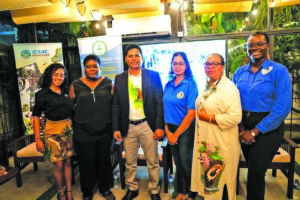
In key conservation landscapes such as the Kanuku Mountains Protected Area and Karanambu, joint monitoring initiatives have helped establish robust population baselines, with observations confirming stable groups of otters in multiple river systems. Trained community rangers and citizen scientists also play an active role in mapping otter distribution and identifying threats such as illegal gold mining and mercury pollution, which impact freshwater food chains. Featured panelists included Managing Director of Karanambu Lodge, Melanie McTurk; Community-Based Natural Resource Management Specialist, Dr Deirdre Jafferally; Commissioner of the Guyana Wildlife Conservation and Management Commission (GWCMC), Alona Sankar and Programme Coordinator of the EMC Foundation, Sarah Singh. The discussion was moderated by Executive Director of PAT Oleta Williams who guided the conversation on the ecological importance of Giant River Otters, the threats affecting their populations and opportunities for strengthening conservation partnerships across Guyana. Throughout the discussion, panellists highlighted the critical role Giant River Otters play in maintaining healthy freshwater ecosystems and the importance of protecting wetlands, rivers and surrounding habitats that support biodiversity. The panel also explored how research and monitoring programmes are contributing to a better understanding of otter behaviour, habitat use and conservation needs in Guyana. The discussion further emphasised the importance of collaboration among conservation organisations, Government agencies, researchers, local communities and the public to strengthen conservation outcomes. Panellists also noted the role of education and public awareness in fostering appreciation for Guyana’s wildlife and encouraging greater stewardship of natural resources. McTurk highlighted the significance of long-term conservation efforts and research in protecting the Giant River Otter and its habitat. “Many people don’t realise that giant otters are one of the most understudied species, to the point where we don’t even know if they exist in some areas. That gives us an opportunity to start looking at the varying populations and how those individual populations are impacted by human activity. There is an opportunity for researchers and young scientists in the room to start understanding the DNA.” In addition, Dr Jafferally emphasised the importance of integrating community engagement and local knowledge into conservation initiatives to support long-term environmental stewardship. “Community efforts to care for abandoned and injured giant river otter pups have been impactful, helping to support the species’ recovery and contributing to their return in areas where they were once rarely seen. Citizen science is an important part of that, as well as education and awareness. Educating people is important, getting them involved, not just those who already know and see and want to be involved in established forums.” Further, Sankar explained the importance of strengthening wildlife conservation policies, legal protections, monitoring, and enforcement mechanisms to ensure the long-term survival of Guyana’s giant otter populations and other wildlife resources. “What we need to strengthen is our monitoring and enforcement capability to ensure that persons are actually abiding by what the law requires. Now we want to increase our giant otter populations, so if you’re affecting the viability of the species, that is very negative.” Meanwhile, Singh touched on the Foundation’s ongoing Giant River Otter Education and Conservation Programme in the Mahaica Watershed and the importance of combining research and education initiatives to improve understanding and protection of the species. “We started this Giant River Otter Education and Conservation Programme in October 2025. It comprises of two components: Research and Monitoring and Education and Awareness. Under our Education and Awareness component, we have environmental clubs that we work with along the Mahaica River, and we are also working on communication tools and capitalising on social media audience to share key messages.” The panel discussion highlighted the collective commitment among conservation partners and stakeholders to protecting Guyana’s Giant River Otters and the freshwater ecosystems they depend on. The engaging dialogue and knowledge sharing throughout the evening reinforced the importance of continued collaboration, research and public awareness to ensure the long-term conservation of one of Guyana’s most iconic species.
Discover more from Guyana Times
Subscribe to get the latest posts sent to your email.