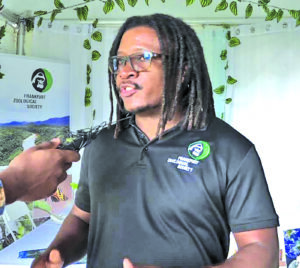
A project officer associated with the Frankfurt Zoological Society, Alex Stewart, has successfully secured a €50,000 European grant to support a community-based conservation initiative aimed at improving livelihoods and protecting biodiversity in the Kanuku Mountains’ Protected Area.
The grant will fund the establishment of aquaculture (fish farming) projects in communities in Region Nine (Upper Takutu-Upper Essequibo). The initiative seeks to address declining fish stocks and food security challenges while also supporting wildlife species such as the giant river otter.
The grant was secured through the KfW Foundation.
The Kreditanstalt für Wiederaufbau (KfW) is an international organisation that works together with its partners in developing countries in order to identify projects/programmes which promote sustainable development. With a development mandate that receives funding from both public and private sector organisations, KfW’s activities largely focus on climate change adaptation and mitigation activities. These activities include improving water supply, securing food provision, increasing energy efficiency, employing renewable energies and others.
The Frankfurt Zoological Society is also participating in the event to highlight its work in Guyana and internationally, with a particular focus on conservation efforts in the Kanuku Mountains region. The organisation’s name originates from Frankfurt, where its headquarters are based, and it was established in 1858.
“So, this undertaking is actually a grant that I would have secured at the Frankfurt Spring School. I attended and presented a project along with six persons, and we secured a grant to do a project with communities in the Congo Bunkers protected area. project would basically be establishing aquaculture farming or fish farms in three communities. That’s Kumu, Sand Creek, and Maruranau.”
“Fish is an important part of the daily life or the livelihood of people in the Congo Bunkers protected area. They depend heavily on fish. Also, we recognise that fish are an important part of the ecosystem, specifically for species such as the giant river otter. And these farms would provide an additional means of protein or food to people because they would have recognised or realised that there’s a reduction in fish sources.”
He explained that the fish farms would serve as an additional source of food and protein, noting that local communities depend heavily on fish for their livelihoods. He also highlighted that fish is essential for the survival of the giant river otter.
He said the project aims to create a balance where nature meets livelihood, allowing both people and wildlife to benefit while ensuring the ecosystem can function effectively.
The decline in fish stocks was identified through work with the Protected Areas Commission and direct engagement with local communities, which indicated a noticeable reduction in fish availability in the area.
However, he noted that consultations have already started within villages in Region Nine, and the project is expected to progress shortly.
In fact, only in late 2024, this publication reported that wildlife in the South Rupununi is at risk of becoming extinct due to unregulated hunting and fishing – something which village leaders are calling for assistance in tackling.
Various leaders from the South Rupununi have previously voiced concerns about overhunting and overfishing in their villages, leading to a shortage of wildlife.
In 2024, this publication had reported that the very existence of turtle species in the Rupununi area was facing detrimental threats of over-consumption and heavy rainfall spells, prompting actions from locals to reverse this trend before extinction.
With these challenges in mind, he revealed that after this project is fully set out, he announced that villagers will also have the opportunity to manage the project, creating more opportunities for the region.
“One of the important things is the long-term maintenance or the sustainability of these projects, and yes, the villages or the communities would be in charge of these fish farms. They are owning it; they will be managing it for the long term, and we will be providing long-term support also to ensure that these farms just don’t come as a one-time thing and then later on it’s half and it’s no more. So, we want to support that for the long term because we believe in doing projects and having these projects continue over a number of years.”
Discover more from Guyana Times
Subscribe to get the latest posts sent to your email.