

With a renewed focus now on developing the Western Hemisphere to sustain itself, Guyana is being positioned to capitalise on potential opportunities that will come as the region avoids future fallouts from crises around the world.
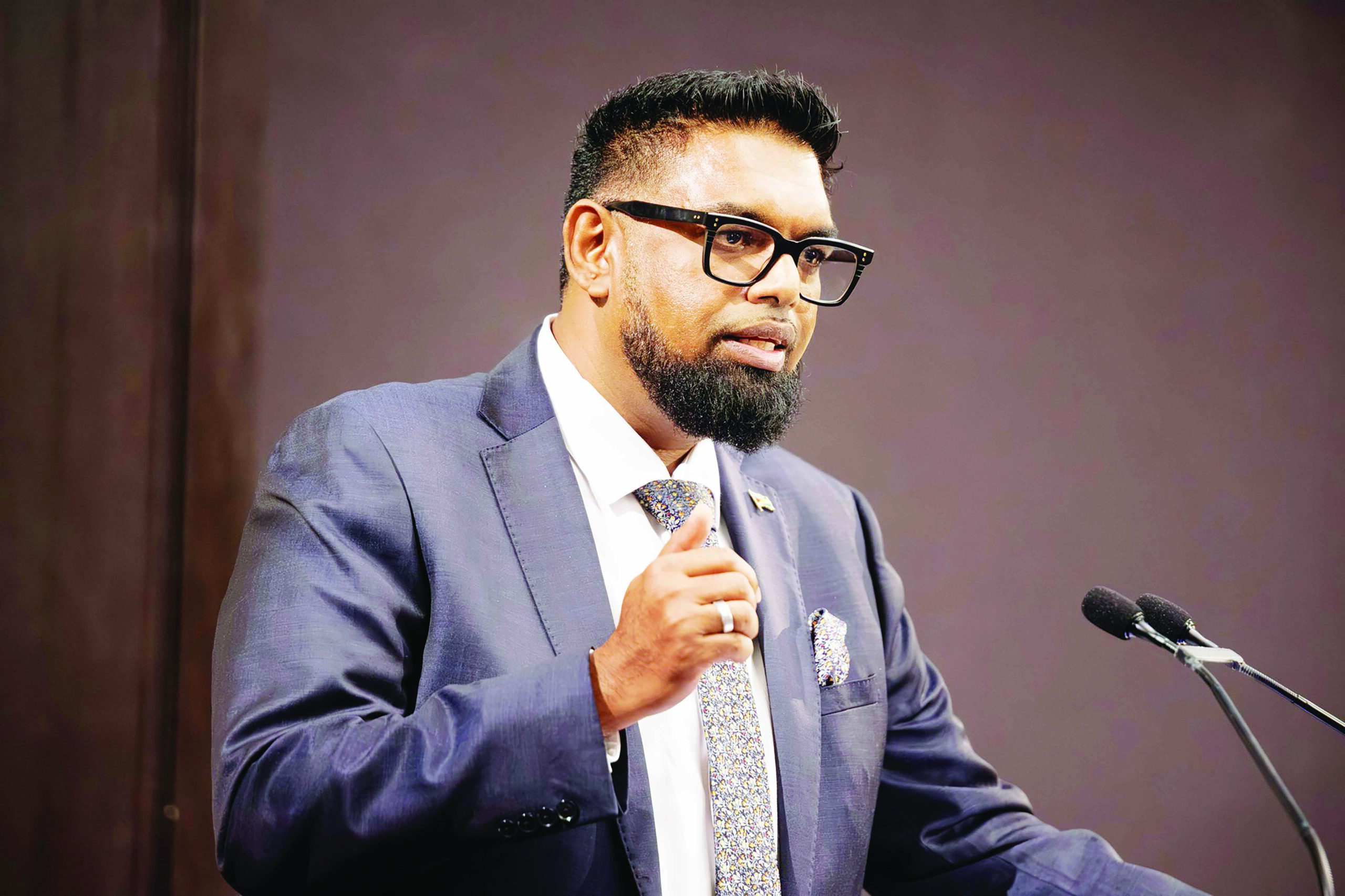
Delivering a presentation hosted by the Baker Institute’s Center for Energy Studies, Rice University in Houston, Texas, earlier this week, President Dr Irfaan Ali cited the impact that the ongoing war in the Middle East has had on investments there.
“One of the things we have learnt the last three years in the world is not only about the production of energy, but also how much of that energy you can consume yourself to add value and create a multiplier effect within your countries. Whether it’s data centres, processing plants, or the petrochemical industry, it’s creating the multiplier effect… We have also seen how exposed the US investment and other investment from this hemisphere were and continue to be in data centres in the Middle East, whether in Qatar or the UAE [United Arab Emirates], with no redundancy,” he noted.
According to President Ali, the region already has the potential and resources to meet its demands, as he called on countries in the Western Hemisphere to channel their resources here.
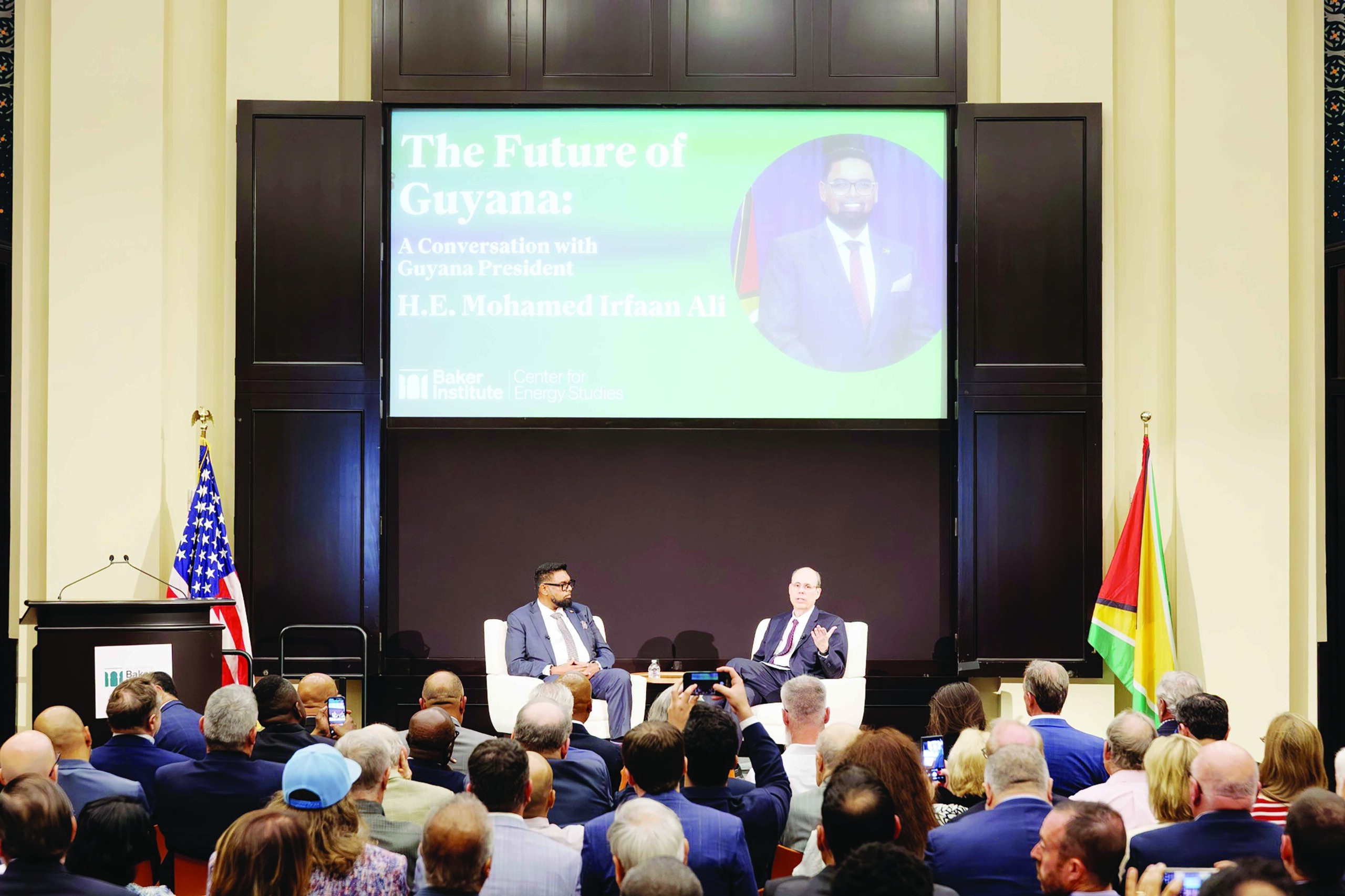
“Today, with Brazil, Guyana and this region, where you have strategic gas exploration, we now must rethink this strategy… It is time we in the Western Hemisphere maximise and optimise our potential in creating a common system with common infrastructure that would allow us to grow together in a secure environment,” he posited.
This, according to the Guyanese leader, would open up tremendous opportunities, something which Guyana is readying itself to capitalise on by building out the infrastructure and systems not just for national use but also to meet regional demand.
“This investment also allows us to leapfrog Guyana, leapfrog our competitiveness, our human capital, our industries, our governance system, and our efficiency level at a much faster rate than if we were to follow a straight-line approach. Because you can’t position yourself to compete in this sector if your country does not demonstrate to the world that you’re applying the output of this sector to improve your own efficiency and competitiveness,” the Head of State noted.
Unlock market potential
Already, he pointed out Guyana, blessed with geography, is seeking to unlock the market potential in the landlocked northern Brazil. President Ali believes that the future of the two neighbouring countries is intricately linked, especially in the area of energy security.
“We have the ability of improving their competitiveness by leaps and bounds. But for that to occur, we have to have the revenues to build the infrastructure, to build the port facilities, to build the roads, to build the bridges, to build the transmission lines that will interconnect the energy potential. And that is exactly what we are doing now. Because we know that while geography is our advantage, it cannot be our advantage if we don’t have the integration of the markets, the integration of the infrastructure, and the interconnectivity of the system,” he stated.
Further recognising Guyana’s role as an important catalyst in pushing regional growth across borders, President Ali went on to highlight the country’s efforts in becoming a major transport and logistics hub in the region.
He said, “We are now building out the infrastructure to support this advantage so that Guyana’s [geographical] position allows us to be that maritime hub and air hub for South America and the Caribbean.”
According to the Head of State, these efforts complement the country’s unprecedented transformation and align with the Government’s push for economic diversification – all of which are being propelled by revenues from Guyana’s burgeoning oil and gas industry.
In fact, the Government has been investing in roads, airstrips, and health facilities in the hinterland, connecting Indigenous communities to essential services that have eluded them for decades. Those investments, President Ali said, are now unlocking Guyana’s untapped eco-tourism potential, while simultaneously improving the quality of life for communities in remote regions.
The Guyanese leader pointed out that his Government is focused on long-term, wealth-creating investments rather than short-term cash transfers.
“We prefer to invest in opportunities that create wealth, in the development of human capital and infrastructure, and in social safety nets that allow our people not to lose their own capacity to be innovative, hard workers, and builders, rather than waiters,” the President stressed.
Nevertheless, as Guyana moves forward with this new development model, President Ali called on the Baker Institute, an American think tank that functions as a centre for public policy research, to partner with the country in building out a diversified and resilient economy.
“We’re interested in being a model, a small country that did it right, that shared the wealth, that protected its environment, and that built a diversified economy strong enough to survive the energy transition through energy balance… There is no better place to have this discourse than in an academic institution where research and development, data, and analytical skills are sharpened to help policymakers make the best possible decisions.”
“Partner with us, study us, and let the world watch us together. Hold us accountable because we are trying something hard. We’re trying to be a petro-state that does not become a petro-dominated economy,” the Guyanese leader declared.
Discover more from Guyana Times
Subscribe to get the latest posts sent to your email.