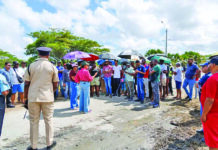


In light of ongoing upgrades to Guyana’s road network, poor driving habits continue to pose a major safety risk, with the Chairman of the National Road Safety Council (NRSC), Earl Lambert, highlighting that many motorists have forgotten fundamental road rules. Speaking on a recent episode of the ‘Road Safety and You’ programme, Lambert said that even experienced drivers are contributing to unsafe conditions on the road.
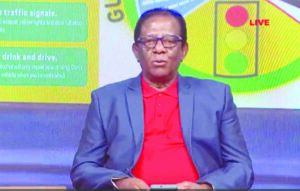
“I know that there are a lot of folks who are driving, but sometimes they make mistakes,” he said, adding, “Those who would have gone through the tests for years now… you’re driving, and you would have forgotten certain things.”
Lambert explained that revisiting the driver’s manual will help to refresh motorists’ knowledge. “I’m using the programme to bring you up to speed on some of the things that you should know when driving, when using the road,” he stated.
Among the key concerns highlighted was the widespread disregard for traffic signs, even as new roadways and upgraded corridors introduce additional signage. “Just don’t drive by and don’t pay attention to them,” Lambert urged. “Because many times, we’re so taken up with what we’re doing that we don’t see these signs.”
He pointed to several locations, including the University Road, Sheriff Street and Conversation Tree junctions, where drivers often ignore clear instructions. “That sign tells you that you cannot turn around in the middle of the street or in an intersection… it’s simply saying that you cannot turn around there,” he explained.
Pedestrian safety also remains a pressing issue, particularly in school zones, where warning signs are frequently overlooked. “This sign warns of the likely presence of pedestrians nearby… it warns you to slow down, drive with extreme caution and watch for children,” Lambert further explained.
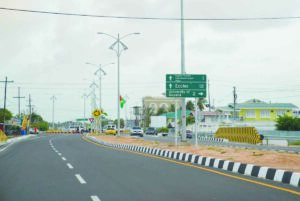
He added that drivers must also be mindful of pedestrian crossings ahead, noting, “You must yield to pedestrians on the crosswalk. Use caution, drive more slowly, and watch both sides of the street.”
With major infrastructure works underway across parts of the country, Lambert warned that construction zones present additional dangers if motorists fail to comply with traffic controls. “Orange warning signs tell you that workers, machinery, and barricades are just ahead. You may need to slow down and change lanes,” he said. He stressed that these measures are critical for protecting both drivers and road workers. “These signs are there to help everybody that is in that area,” Lambert noted, explaining that traffic control devices are used “to direct drivers or pedestrians safely through the work zone and to provide for the safety of the highway workers.”
The NRSC Chairman also addressed the improper use of road markings, particularly the illegal crossing of solid lines. “You may not cross these lines… to pass”, he explained, referring to double solid yellow lines, while noting that they may only be crossed when making a turn.
Lambert, however, cautioned against poor turning practices, which he observed first-hand on local roadways. “You just don’t come… and then you want to turn left… you have to anticipate your turn,” he said, urging drivers to signal early and position their vehicles correctly.
“You let vehicles know that you’re making that turn… and you position yourself, and you make the turn,” he added.
As Guyana continues to modernise its road infrastructure, Lambert emphasised that driver behaviour remains a critical factor in ensuring safety. “You’re driving, and you would have forgotten certain things,” he reiterated, underscoring the need for motorists to revisit the basics.
Guyana has undergone a major transformation of its road network over the past several years, driven by increased economic activity, population growth, and expanding housing developments.
Since around 2020, successive infrastructure projects have focused on widening major corridors, constructing new highways, and improving community access roads to ease congestion and improve connectivity.
One of the earliest major upgrades in this recent wave was the East Coast Demerara (ECD) Road expansion, which saw sections between Better Hope and Belfield upgraded and commissioned in 2020.
This momentum accelerated significantly after 2022, with the Government rolling out a broader transport strategy aimed at modernising the country’s road network. A key milestone came with the opening of the Ogle to Eccles Highway in 2025, a US$133.8 million project linking the East Coast and East Bank corridors.
At the same time, large-scale upgrades have been ongoing along the East Coast, including a US$192 million road widening project from Sheriff Street to Mahaica. The project, which is expected to transform the corridor into a four-lane highway, was reported to be over 80 per cent complete by late 2025. Further investment has also been directed at expanding community and access roads.
In 2024 alone, more than 370 roads across Demerara were upgraded at a cost of $3.1 billion, improving access in areas such as Eccles, Diamond, Enmore and several parts of Georgetown. Additionally, the Government announced a $14.4 billion programme to expand narrow East Coast roads into wider carriageways to accommodate increasing traffic volumes due to rapid development along the corridor.
This month, President Irfaan Ali said projects such as the upgrading of the Aubrey Barker Road into a four-lane highway are part of a national transport master plan designed to improve connectivity, reduce travel time, and modernise Guyana’s infrastructure.
Discover more from Guyana Times
Subscribe to get the latest posts sent to your email.