


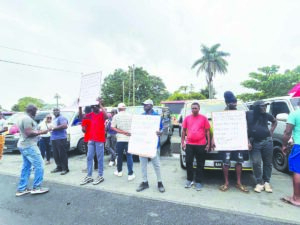
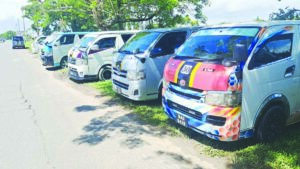
Days after the Government confirmed that it did not sanction any changes to the present public transport fare structure, scores of minibus operators refused to ply their trade and called for an urgent amendment to the decade-old document. This has caused a significant burden and inconvenience to those who rely on public transport for work, school or other domestic purposes. In light of this new development which can last for days, Public Works Minister Juan Edghill on Saturday strongly suggested that public transport must remain accessible and affordable, while also ensuring equity for thousands of people in Guyana.
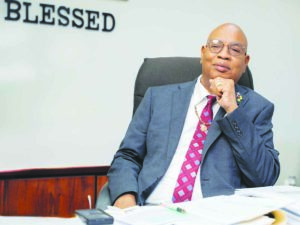
According to the Minister via a social media post, the average Guyanese citizen who relies on public transport to commute to work, attend school, access essential services, or carry out daily activities should not be forced to shoulder exorbitant fare increases imposed by minibus operators. “Public transport must remain accessible, affordable, and equitable because, for thousands of Guyanese, it is not a luxury; it is a daily necessity,” he reiterated. The Minister further noted that it is deeply concerning to witness recent attempts by minibus operators to justify unauthorised fare increases on the grounds of rising operational costs; while overlooking the extensive measures the Government has already implemented to alleviate these pressures. “Public transport operators, in particular, have directly benefited from these initiatives, just as the wider business community has… why should the people who depend on public transport the most now be forced to bear the immediate burden of higher fares?”
“The market vendor trying to earn an honest living, the parent stretching every dollar to provide for their family, the pensioner travelling to a medical appointment, and the security officer heading home after a long shift are the individuals who will feel this impact first, and feel it hardest.” He underlined that the Government remains open to constructive dialogue where legitimate concerns exist, but maintains that fairness must extend to all stakeholders—especially consumers whose livelihoods depend on affordable public transport. He nevertheless, cautioned that any review of fares must be conducted through proper institutional channels, guided by due process and thorough consultation, rather than unilateral decisions that immediately impact ordinary Guyanese.
“The Government will continue to stand firmly with the people of Guyana in safeguarding fairness, affordability, and access to essential services, while continuing to engage all stakeholders in good faith,” the Minister underscored.
The Minister also highlighted that over the past several years, the Government has implemented deliberate and significant measures to cushion the impact of rising global costs—particularly those affecting transportation. He explained that these subsidies include the reduction of fuel excise tax from 50 per cent to zero per cent. “When the current administration assumed office, the excise tax on fuel stood at 50 per cent. Recognising the severe impact that volatile global fuel prices would have on households, businesses and transport operators, the Government progressively reduced this tax until it reached zero per cent in March 2022, where it has remained.” He described this as a direct intervention to lower fuel costs nationwide. “Maintaining a zero per cent excise tax has come at a tremendous cost to the State. The Government has foregone billions of dollars in annual revenue rather than allowing the full impact of international fuel price hikes to be passed directly onto the people of Guyana.” He also highlighted that the Government intervened to alleviate the burden of elevated global shipping costs by adjusting freight charges to pre-pandemic levels when calculating import taxes. These measures helped ease financial pressure on imported transportation-related commodities such as tyres, batteries, lubricants, spare parts and other essential vehicle components. “The Government has consistently taken action to mitigate inflationary pressures across the economy. We understand that transportation costs do not exist in isolation, and that affordability for commuters must be viewed within the wider context of household expenses and national economic stability.” Only recently, President Dr Irfaan Ali urged transport operators and other private sector stakeholders benefiting from Government fuel subsidies to “be fair to the public,” arguing that many have not passed on the savings to consumers despite billions of dollars in tax relief and subsidies aimed at cushioning the impact of rising global fuel prices.
Discover more from Guyana Times
Subscribe to get the latest posts sent to your email.