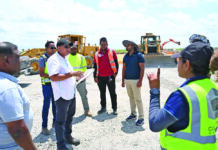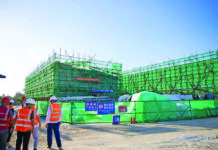


– denies involvement in delays of speciality hospital at Kamarang
Tensions continue to flare between the Amerindian Peoples Association (APA) and the Ministry of Health, with the APA rejecting the Government’s assertion that it played a role in the decision-making process regarding the construction of a speciality hospital in Kamarang Village, Region Seven (Cuyuni-Mazaruni).
The APA, in a statement to the media on Friday, stated that it is not, and has never been, part of the decision-making process for any village council regarding the governance of their residents, resources, lands, and territories. The organisation added that it does not impose its views or positions on communities regarding project developments that must go through village councils and the wider community.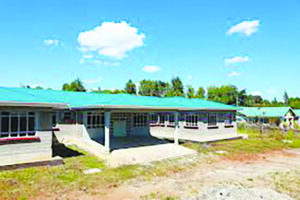
“The Amerindian Act is clear on the role of village general meetings in decision-making, and communities must make decisions free from coercion and intimidation. Therefore, it is dishonest for the Ministry of Health (MoH) to assert that the Association was responsible for the hospital’s delays. The Ministry’s claims are intended to mislead the public, make the APA a scapegoat for its deficiencies, and hide the real facts of the matter. The APA challenges the Ministry to produce its record to show that the APA is responsible for discouraging the community from having the hospital built,” the release added.
Further, the APA reminds the public that it is a non-Governmental organisation (NGO) whose mission is to advocate for the promotion, protection, and preservation of the rights of Guyana’s Indigenous Peoples. This includes the first peoples’ right to self-determination along with their right to be consulted in a way that aligns with the right to Free, Prior, and Informed Consent (FPIC). The APA added that in his capacity as Toshao of Kamarang-Warawatta, Lemmel Thomas is likely to have consulted with his village council on the best way forward for this project.
“The APA was not involved in this process, nor can we comment on the internal deliberations of the village council. It is not the association’s place to do so, as it would undermine the very practices it is committed to upholding,” the APA reiterated while adding that there should be no misinterpretation of the fact that the provision of a speciality hospital in the district by the Government is welcomed. The APA states it does not deny the significant investments in health made by the Government of Guyana and, in fact, appreciates that the Ministry was forthright in releasing such data and information that can continue to inform public policy, particularly at the community level.
“We remind you that it is the duty of the Government to provide such facilities with culturally appropriate measures, thereby providing equal access to speciality health services and care to the people of the Upper Mazaruni and, indeed, all of Guyana. So, the MoH’s attempt to blame the APA for an internal matter in Kamarang Village is to be condemned in the strongest possible terms.”
Meanwhile, the APA urged the Ministry to pay attention to the substance of its intervention at the 25th United Nations Permanent Forum on Indigenous Issues (UNPFII), which emphasised that councils, with respect to their customary governing practices, must be involved in designing the appropriate health responses for our villages, districts, and territories.
“We cannot ignore the fact that there are still severe challenges and deficiencies in the delivery of health services to our people. All is not perfect, and this must be recognised. In the days following our intervention at the UNPFII, we received more validating reports from villages about dysfunctional referral systems from a health centre, ill-equipped medical facilities, and the fact that suicides are a problem within our communities. These and other cases simply punctuate our position at the UN. Public health programmes must be responsive to the needs of villages and developed in continuous consultation with our councils as we face evolving threats to our lands and peoples,” the APA added.
As such, the APA urged the National Toshaos Council (NTC) to consult more with communities and councils on their health needs to realise their vision for appropriate health programmes in their development. “The NTC must take a proactive stance on these matters, as they have a critical role in ensuring that our peoples’ health and well-being are not simply figures on a spreadsheet but are part of long-term sustainable programmes that villages, districts, and councils can take ownership of to achieve development goals,” the APA explained.
Discover more from Guyana Times
Subscribe to get the latest posts sent to your email.